
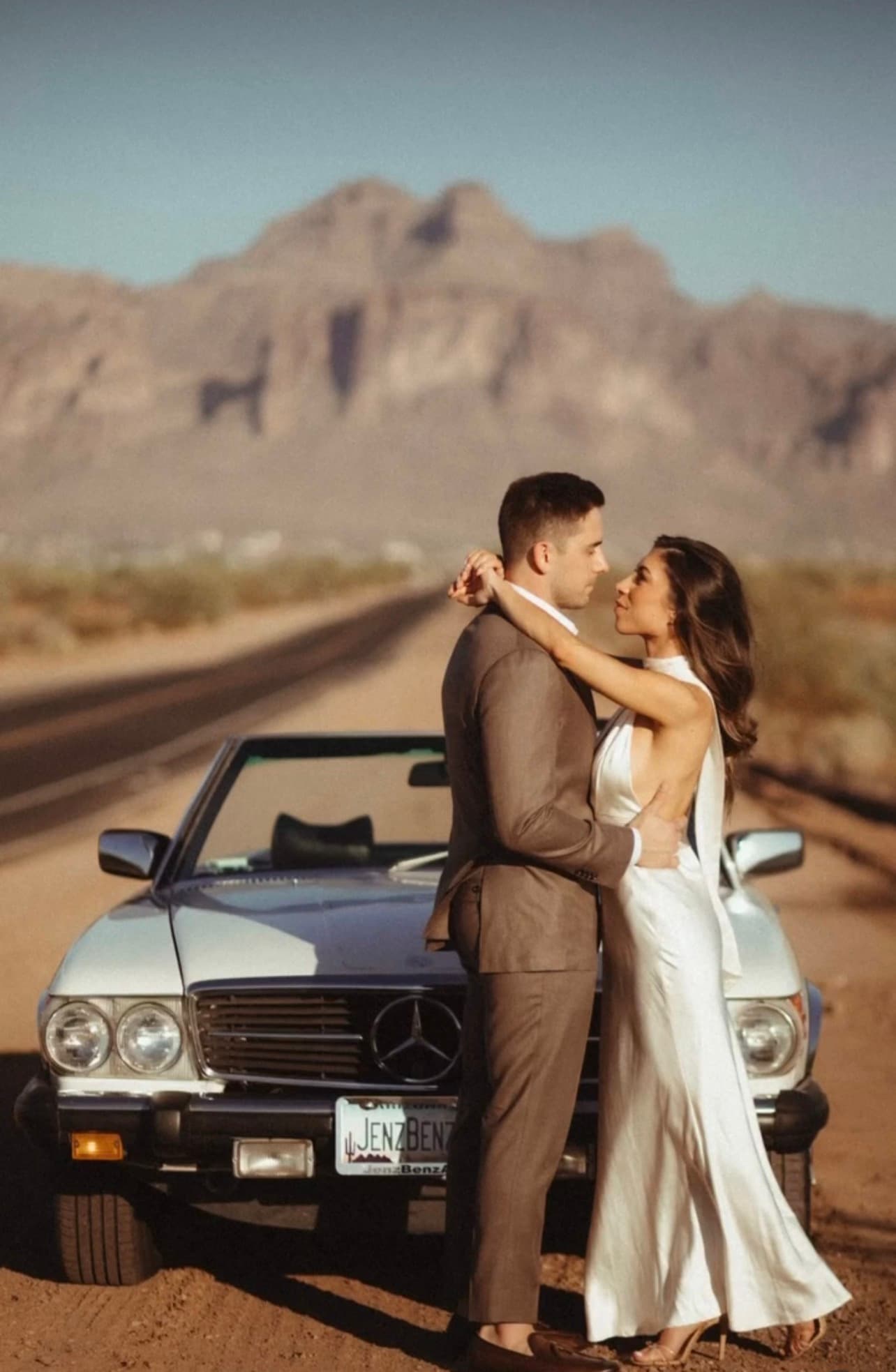
The Art of Posing with Cars: A Complete Guide for Photowhips.com
Why Car Posing Matters
Cars are more than transportation—they're personality statements. Whether it's a vintage classic, a sleek sports car, or a rugged off-roader, the right pose can transform a simple photo into a story. At Photowhips, we believe every vehicle deserves its moment in the spotlight, and every owner deserves to look like they belong with their machine.

Three Essential Car Poses Every Photographer Should Master
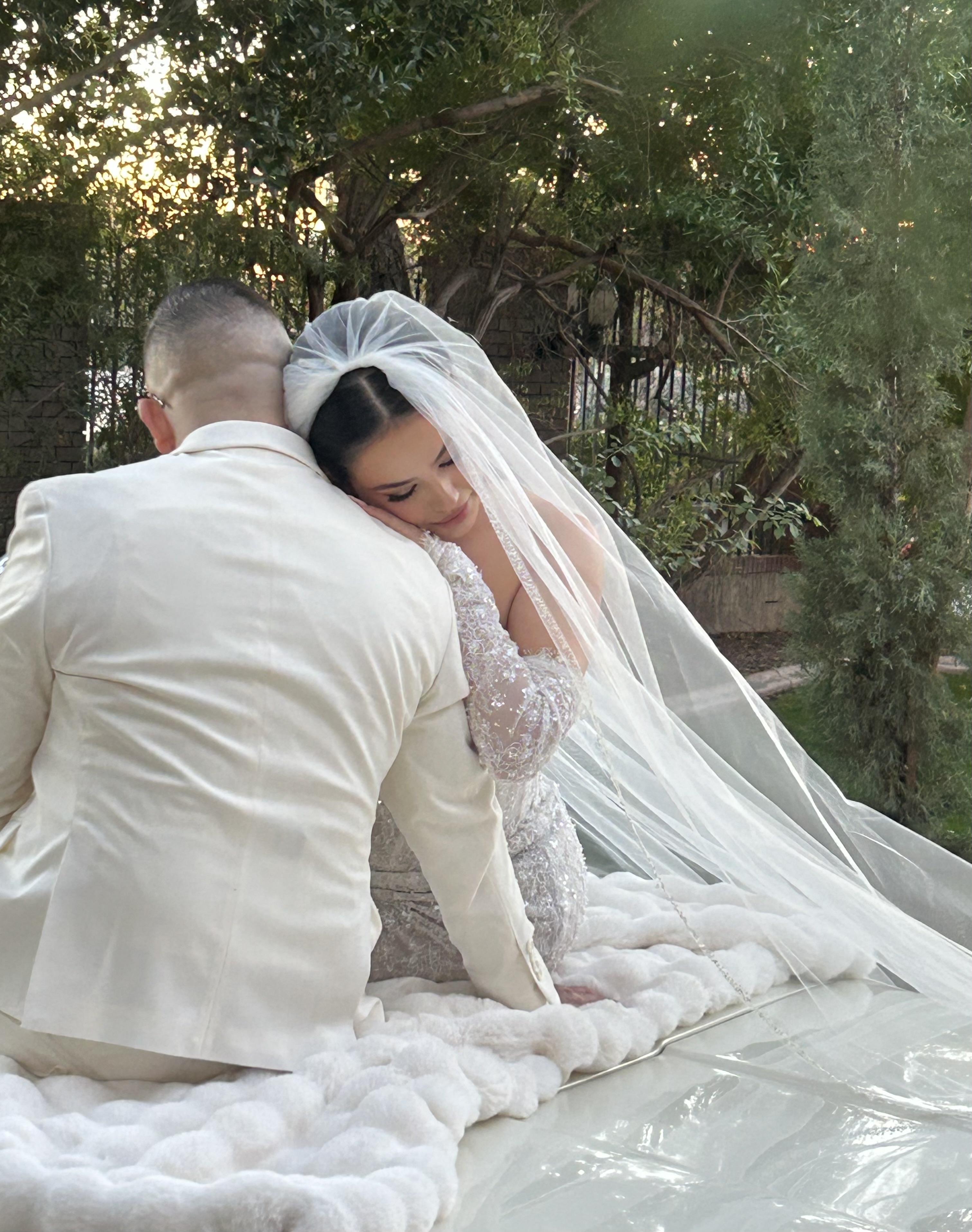
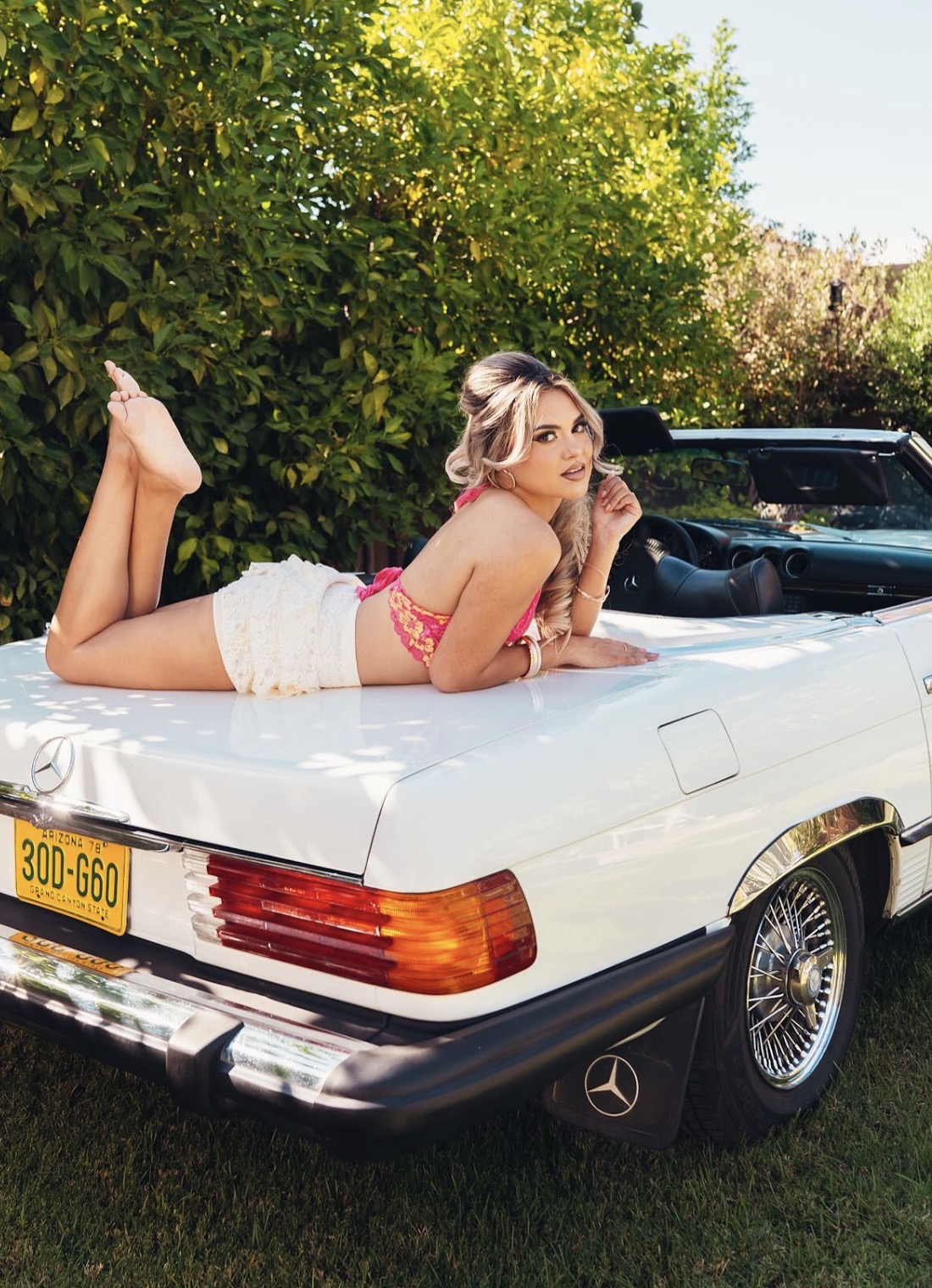
1. The Convertible Pose
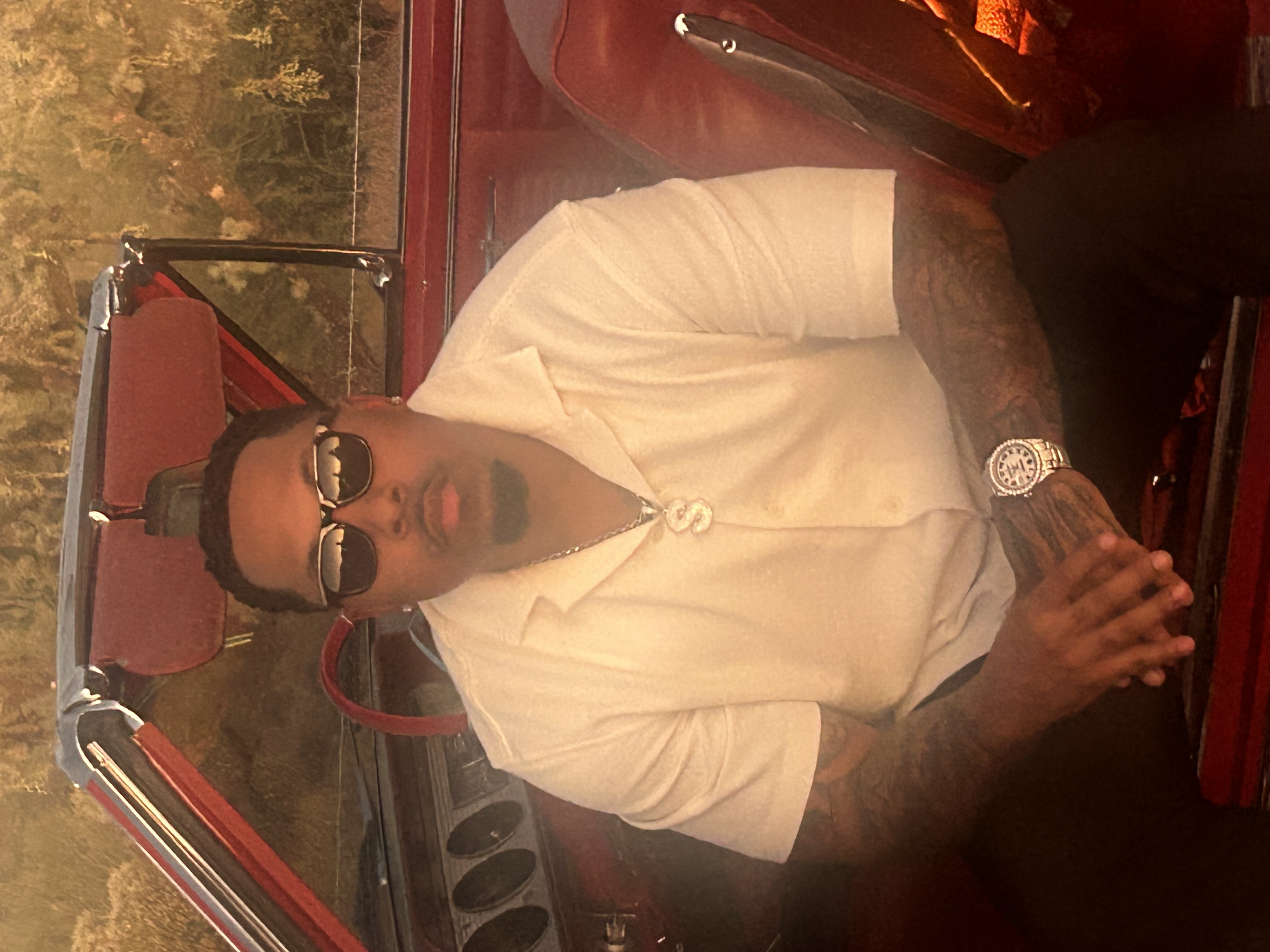
Convertibles present a unique opportunity because the car becomes part of the environment rather than a barrier between you and the world.
The Setup:
• Top down, obviously—this pose doesn't work with the roof up
• Engine off for safety, but keys in hand or resting on the center console
• Golden hour side-lighting to catch the interior details
The Pose:
Sit on the top of the driver's seat backrest—yes, on it, not in it. Feet planted on the seat, one knee up, arm resting across it. Or reverse it: stand in the passenger area, one hand on the windshield frame, body angled toward camera, looking back over your shoulder at the road behind you.
Why It Works:
Convertibles are about freedom and open air. Posing outside the traditional seating position emphasizes that liberation. You're not driving—you're inhabiting the moment.
Pro Tip: Wind matters. A light breeze adds movement to hair and clothing. Too much wind creates chaos. Shoot early morning when air is still.
Wardrobe Note: Sunglasses are mandatory. The open sky creates harsh light even at golden hour. Aviators for classic roadster vibes, wayfarers for modern convertibles.
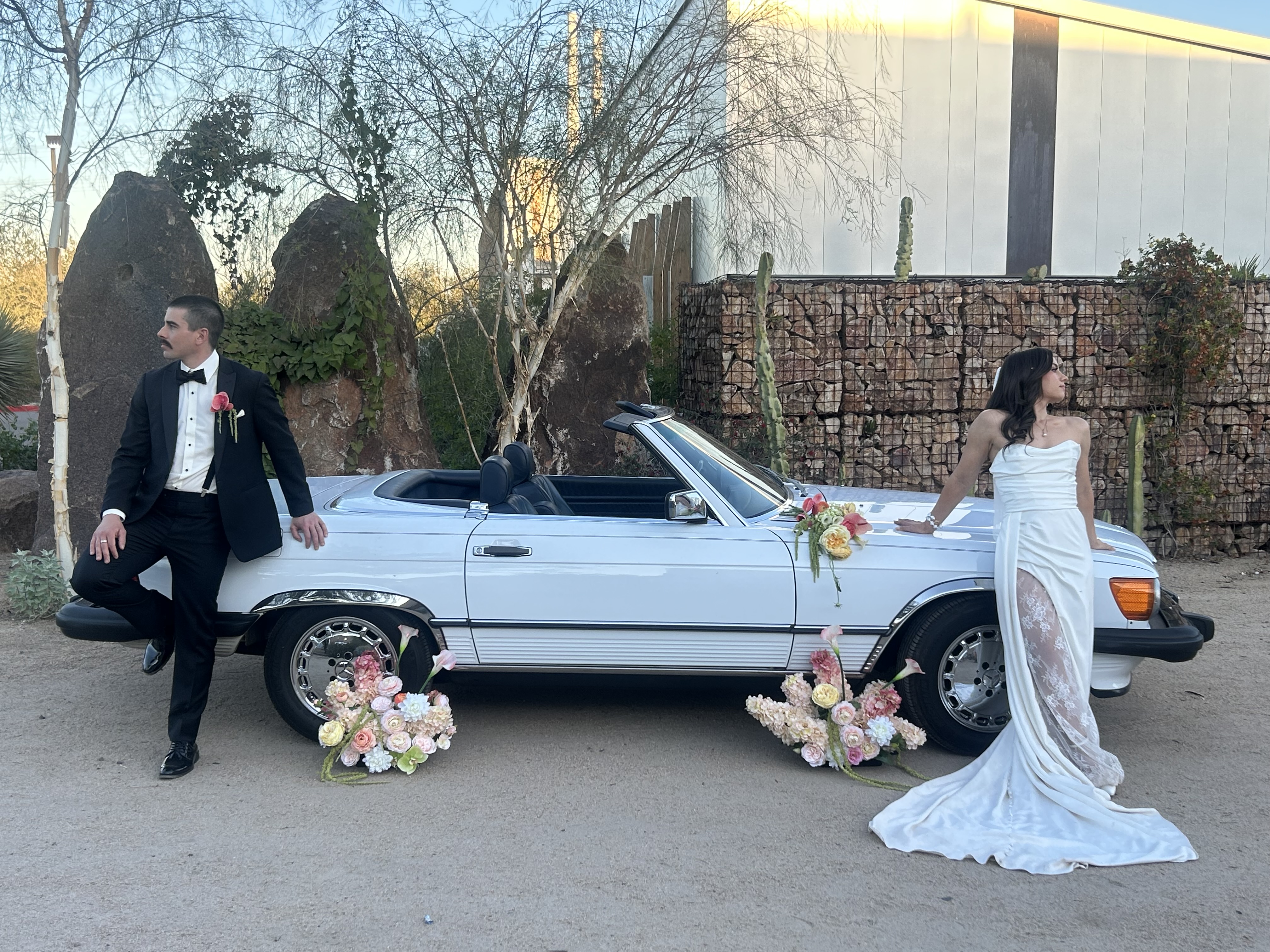
2. The Wide Shot: Car, Couple, and Landscape
This is the money shot—the one that sells the lifestyle, not just the vehicle.
The Setup:
• Position the car at a 45-degree angle to camera, occupying the left or right third of frame
• Couple stands 10-15 feet in front of the car, not touching it
• Background should be expansive: coastal highway, desert vista, mountain overlook, vineyard rows
The Pose:
Don't pose the couple at the camera—pose them toward each other with the camera capturing the scene. One person gestures toward the horizon, the other looks at them, smiling. Or both walk away from the car toward the vista, hand in hand, glancing back at each other.
The car anchors the composition. The couple provides scale and human connection. The background delivers aspiration.
Camera Settings:
• Aperture f/8 to f/11 for sharpness throughout
• Wide angle 24-35mm to capture scope
• Shoot slightly below eye level to give the car presence
Timing: Blue hour for cityscapes, golden hour for natural landscapes. The car's silhouette against a sunset sky with the couple in foreground creates immediate emotional impact.
Why It Works:
This shot answers the question "Where can this car take us?" It transforms metal and rubber into possibility and shared experience.
3. The Classic Driver's Seat: Looking Out the Window
The most timeless car pose in existence—and for good reason. It never fails.
The Setup:
• Driver's seat only. Passenger seat lacks authority.
• Window rolled down completely, arm resting on the door frame
• Camera positioned at a 30-degree angle to the front of the car, shooting toward the driver's side
The Pose:
Sit naturally in the seat—don't perch on the edge or slouch back. One hand on the wheel at 12 o'clock, the other arm extended out the window, wrist relaxed. Turn your head to look out the window, not at the camera. Your gaze should land somewhere in the middle distance, as if watching something interesting unfold.
The expression is key: not a smile, but a slight, knowing curve of the lips. The look of someone who knows where they're going and isn't concerned about the time it takes to get there.
Variations:
• The Watch Check: Glance at your wristwatch instead of the horizon. Suggests anticipation.
• The Rearview Mirror: Eyes up, checking the mirror, hand still on wheel. Adds narrative tension—what's behind you?
• The Rest: Head back against the headrest, eyes closed or nearly closed. Contemplative, not sleeping.
Lighting:
Side-lighting is critical here. You want light streaming through the windshield to catch your face, but shadow on the interior to create depth. If the sun is too harsh, use a polarizer to cut windshield glare.
Why It Works:
This pose puts the viewer in the passenger seat. It creates intimacy and narrative possibility. Where is this person going? Who are they waiting for? What comes next?

The Fundamentals Behind These Poses
Touch Points Matter
Your relationship with the car should look natural, not forced:


Poses by Car Type
Sports Cars & Supercars
The Driver's Stance: Stand at the open door, one hand on the roof, one foot inside. Look like you're about to slide in for a Sunday drive through the canyons.
The Detail Shot: Crouch by the wheel, examining the brake caliper or rim. Shows you appreciate the engineering.
Classic & Vintage Cars
The Appreciation: Stand back, hands in pockets, admiring the lines. Let the car be the star—you're just the curator.
The Mechanic: Hood up, you leaning over the engine, sleeves rolled. Authenticity wins here.
Trucks & Off-Roaders
The Capability Pose: One foot on the tire, arm resting on the side mirror, looking toward the horizon. Suggests adventure waiting to happen.
Luxury & Exotic Cars
The Arrival: Door open, one leg out, adjusting cufflinks or watch. You didn't drive here—you arrived.

Lighting & Environment
Golden Hour is Non-Negotiable
The hour after sunrise and before sunset transforms metal into liquid gold. Side-lighting emphasizes body lines; backlighting creates silhouette drama.
Location Scouting
Wardrobe & Styling
Your outfit should complement, not compete:
• Monochrome works: Black, white, gray, navy—let the car's color pop
• Avoid busy patterns: Stripes and florals fight with automotive lines
• Consider the car's era: Don't wear modern athleisure with a 1969 Camaro
• Sunglasses: The universal car pose accessory. They solve eye-line issues and add instant cool

Advanced Techniques
The Rolling Shot
Not technically a pose, but essential. Car moving slowly, you walking alongside, photographer capturing motion blur in background, sharp focus on you and the car. Requires coordination but delivers magazine-quality results.
The Reflection Game
Use puddles, windows, sunglasses lenses, or the car's own paint to create layered compositions.
Negative Space
Sometimes the best pose is minimal. Small figure, big landscape, car as the anchor. Suggests scale and adventure.

Common Mistakes to Avoid
1. The Car Show Lean: Hand on roof, hip popped, forced smile. Looks like every other car show photo.
2. The Squint: Bright sun without sunglasses creates unflattering facial tension.
3. The Distraction: Phone in hand, unless the shot is specifically about connectivity/tech.
4. The Disrespect: Never sit on hoods or trunks without owner permission. Even then, tread lightly.
5. The Overcrowding: One person per car for hero shots. Groups dilute the focus.

The Photowhips Philosophy
Great car photography isn't about showing off—it's about storytelling. The best poses suggest a narrative: Where are you going? What have you seen? Why this car, and why now?
Whether you're shooting for a sale listing, social content, or personal archive, remember: the car chose you as much as you chose it. Your pose should honor that relationship.

Ready to shoot? Tag your best car poses with #Photowhips for a chance to be featured.