
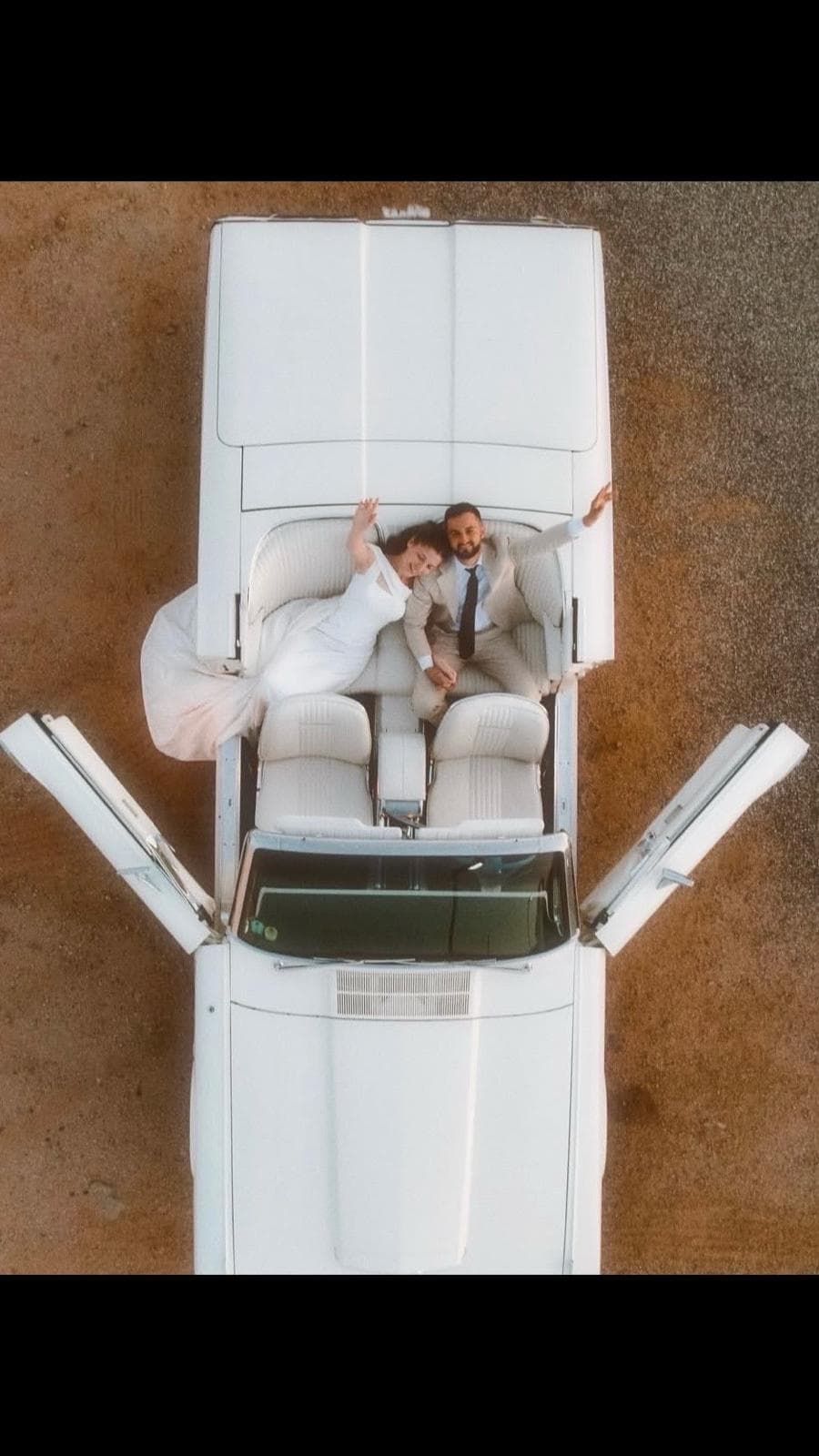
Drone photography has changed the way we see cars
Thunderbird photo by: @nick.production
Drone photography has changed the way we see cars—and for PhotoWhips, it’s one of the most powerful tools to turn a great vehicle into a cinematic experience. When done right, drone shots don’t just show a car… they tell a story about motion, design, and the environment it lives in.
In this feature, we highlight three standout classics—the 1965 Ford Thunderbird, the 1964 Pontiac GTO, and the 1988 Mercedes-Benz 560 SL—captured from above, in motion, and in moments that simply aren’t possible from the ground.
⸻
At PhotoWhips, we believe every car has a story worth telling. Drone photography gives us the ability to tell it in a way that feels modern, cinematic, and unforgettable.
From the elegance of a Thunderbird to the raw energy of a GTO and the open-air luxury of a Mercedes convertible—these aren’t just cars.
From above, they become art.
Elevating the Shot: Why Drone Photography Works
Traditional car photography is about angles. Drone photography is about freedom.
By moving through space—low, high, fast, and fluid—you can showcase not only the car, but how it interacts with the world around it. Desert roads, mountain curves, urban grids—each becomes part of the composition.
The key is variety. The best drone footage isn’t static—it flows.
⸻
Low-Altitude Orbits: Bringing Out the Details
Flying low and circling the car creates a sense of intimacy while still delivering motion. This is where design comes alive.
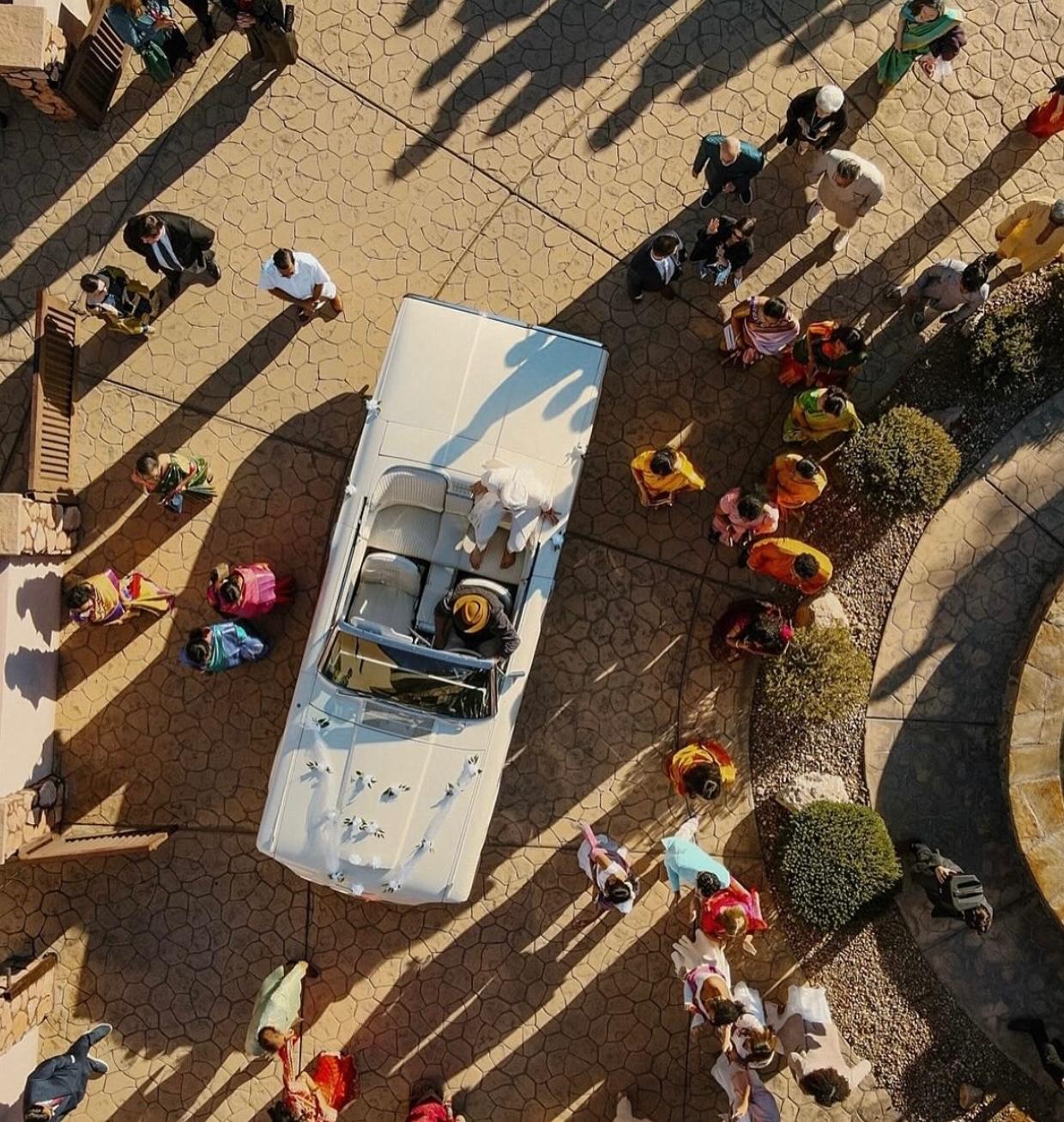
https://www.threads.com/@andrea.cakmar?xmt=AQF0nTA2raso_ZBsrSXHtTcD3JcuVvtr7oCpNmVACnD-5og
On the 1965 Thunderbird, those long, elegant body lines and chrome accents catch the light differently from every angle. A slow orbit reveals its personality—refined, confident, unmistakably American.
The trick here is smooth control and tight framing. Keep the car centered, let the background move, and allow the viewer to feel like they’re walking around the vehicle—only betterHigh-Speed Tracking: Capturing Motion
Nothing replaces the adrenaline of a rolling shot.
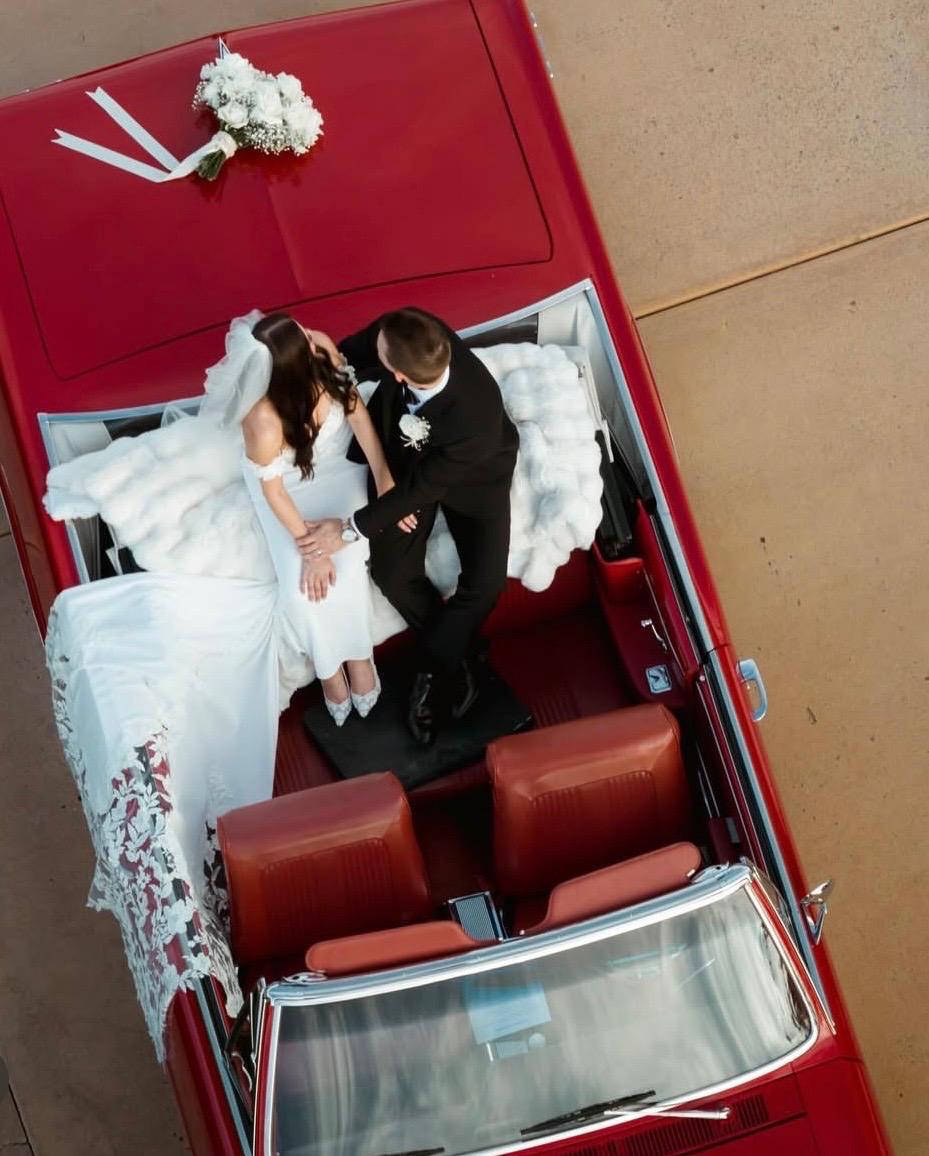
With high-speed tracking, the drone follows alongside or slightly behind the vehicle, locking it into frame while the world blurs past. This technique is perfect for cars like the 1964 GTO, a machine built on power and presence.
Side-profile tracking is especially effective here—clean, aggressive, and timeless. It emphasizes movement while preserving the shape of the car, making it feel like it’s cutting through the landscape.
⸻
Top-Down Reveals: The Cinematic Moment
Then there’s the shot that stops people mid-scroll—the vertical, top-down reveal.
From above, the car becomes part of a larger composition. Roads turn into leading lines, shadows stretch into artwork, and the vehicle becomes the focal point of something much bigger.
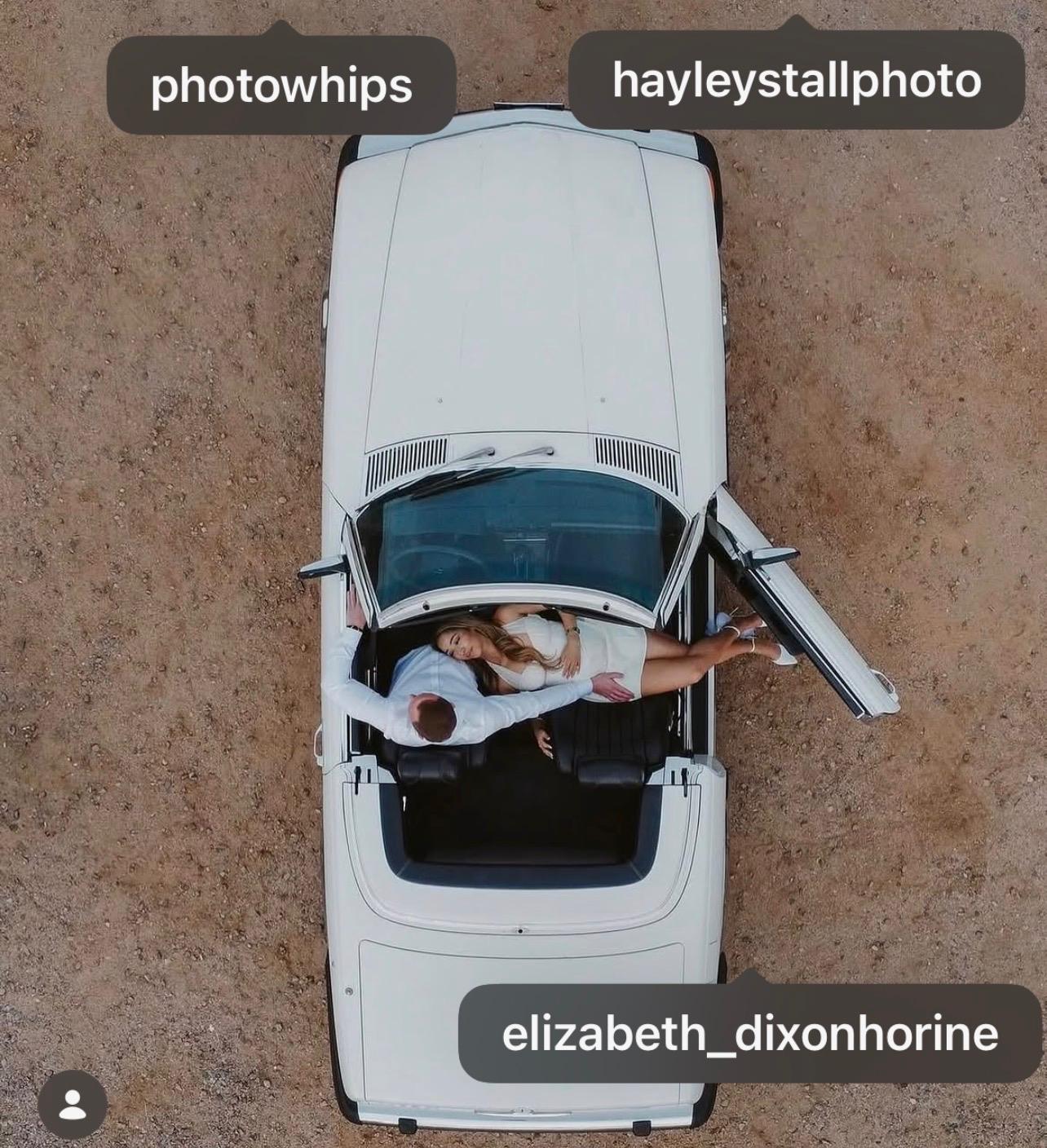
The 1988 Mercedes-Benz 560 SL convertible shines in this setting. With the top down, the interior adds another layer of visual interest—something you simply can’t capture from ground level. The symmetry, the color contrast, the open-air elegance—it all comes together in one clean, striking frame.
⸻
Convertible Drone Shots: A Different Level
Convertibles and drones are a perfect match.
When the roof is down, the camera captures not just the exterior, but the full experience of the car—seats, steering wheel, driver, and surroundings all in one shot. It adds life, depth, and a sense of presence that static photography can’t replicate.
Whether it’s cruising through open desert or parked against a dramatic backdrop, a convertible under a drone becomes more than a subject—it becomes a scene.
⸻
Composition Matters: Leading Lines & Precision
Great drone photography isn’t just about flying—it’s about seeing.
Using leading lines—roads, fences, ridgelines—guides the viewer’s eye directly to the car. Keeping the vehicle centered, often with grid overlays, ensures consistency and balance in every frame.
Small adjustments in angle or altitude can completely change the feel of a shot. The difference between “good” and “scroll-stopping” is often just a few feet in the air.
⸻
Final Take